About
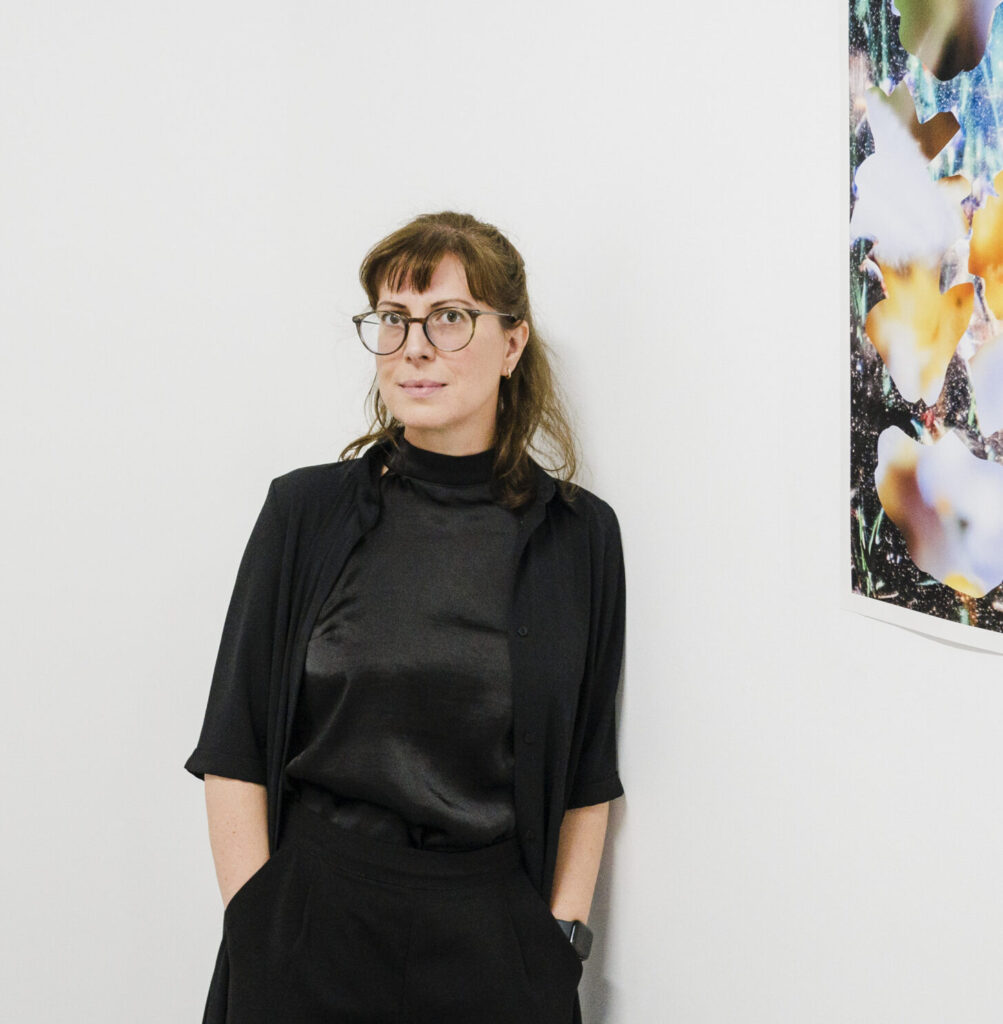
Michaela Putz (*1984) studied Art&Science at the University of Applied Arts Vienna and works across photographic processes, video, object and algorithmic image generation. International exhibitions, talks and screenings; recent exhibitions include Seeds. Reclaiming Roots, Sowing Futures (KunstHausWien / Klima Biennale Wien, 2026) and presentations at Künstlerhaus Sootbörn Hamburg, Tricky Women Festival Vienna, Ars Electronica Festival, Museum Villa Rot, Vienna Collectors Club and Imago Lisboa. She has participated in international residencies and received studio grants for Europe and Asia, most recently in Shanghai (BMKÖS studio grant, 2024). Her work has been awarded several times and was presented in numerous artist talks and panels, among them the Klima Biennale Wien, Museum Niederösterreich, Imago Gallery Lisbon and the CPN Art&Science Center Belgrade, and published in Camera Austria International, catalogue publications and artist books. Her works are held in the collection of the Province of Burgenland, the ING-DiBa art collection and private collections. Michaela Putz lives and works in Vienna.
CV & STATEMENT
EDUCATION
Art & Science with Virgil Widrich, University of Applied Arts, finished June 2017
Communication and Political Science, University of Vienna, finished June 2007
GRANTS, AWARDS & ACQUISITIONS
2025, Art acquisition, Province of Burgenland
2024, Studio grant Shanghai (CN), Federal Chancellery of Austria
2024, Shortlist Marianne.von.Willemer – Award for digital media, Upper Austria
2022, Studio grant Paliano (IT), Province of Burgenland
2019, START-Scholarship, Federal Chancellery of Austria
2019, Art acquisition, Province of Burgenland
2018, Award for Fine Arts, Province of Burgenland
2018, Art acquisition, ING-DiBa
2017, Grant, Internationale Sommerakademie for Fine Arts Salzburg (AT)
SOLO & DUO EXHIBITIONS
2025, METAMORPHOSEN, Duo w/Jasmin Schaschl, studio offbeats, FOTO WIEN (AT)
2025, Ephemere Landschaften, Duo w/Elena Kristofor, STEIN*STEIN Krems (AT)
2023, FRAGMENTARIUM, Solo, Vienna Collector’s Club/Galerie Rudolf Leeb (AT)
2023, Plants, Sand, Sea, Duo w/Laura Sperl, a ilha/xyz Lissabon (PT)
2023, Between Light & Shadow, Duo w/Hessam Samavatian, LOOM, FOTO WIEN (AT)
2021, Hypercene/Hipercen, Duo w/Mato Lagator, Mikrogalerija CPN, Belgrade (SRB)
2021, PALINOPSIA, Solo, OHO Oberwart (AT)
2020, SCREEN ROMANCE, Solo, Red Carpet Showroom, Vienna (AT)
2020, PALINOPSIA, Solo, a ilha, Lisbon (PRT)
2019, Gloom of Mnemosyne, Solo, Bildraum 01, Vienna (AT)
SCREENINGS
2026, PHANTOM OF A GARDEN, cinemAUSTRIA, Austrian Cultural Forum Rome (IT)
2025, PHANTOM OF A GARDEN, Tricky Women Tricky Realities 2025, METRO Kino
GROUP EXHIBITIONS
2026, Sichtweisen Festival, upcoming (AT)
2026, HYBRID PRESENCES, Kunstraum Sootbörn, Hamburg (DE)
2026, Seeds. Reclaiming Roots, Sowing Futures, KunstHausWien (AT)
2025, ALCHEMICAL IM/POSSIBILITIES, Frappant, Hamburg (DE)
2025, GET OUT THERE, Austrian Cultural Forum/Mountain Sea Art Museum Beijing (CN)
2025, Uncanny Gardens, Medienwerkstatt Wien (AT)
2024, ALCHEMICAL IM/POSSIBLITIES, sehsaal, Vienna (AT)
2024, 9 Artists, 9 Days, Vienna Collector’s Club at Otto Wagner Areal (AT)
2023, Too much of a good thing, a ilha/xyz Lissabon (PT)
2023, ANGST, Feelings are Facts, Kunstverein Eisenstadt (AT)
2022, Memory Matter, Museum Villa Rot (DE)
2022, DIGITAL I – ARTEFAKTE/, Fotogalerie Wien/OstLicht.Galerie für Fotografie, Vienna (AT)
2022, FLORA IRANICA, Yassi Foundation, Teheran (IRN), Aknoon Gallery, Isfahan/Iran and Safavi Historical House Isfahran (IRN)
2021, INVICTUS, Alserkal Avenue / Behnoode Foundation, Dubai (UAE)
2021, w/ Simon Lehner and Flavia Mazzanti, Salzamt, Linz (Bildrecht, Ars Electronica Festival) (AT)
2021, “(K)EIN MENSCH IST EINE INSEL“, Künstlerhaus Wien (AT)
2020, HORTUS CONCLUSUS Skulpturenpark, Museum of Now, Vienna (AT)
2020, light specific, minuszwei, Domgasse Vienna (AT)
2020, STAND BY, Galerie Rudolf Leeb, Vienna (AT)
2020, CEREBRO CON HUEVO, OFFSHOREd, New Jörg and Biquini Wax EPS, Mexico City (MEX)
2020, KALEIDOSKOP, NÖ DOK Dokumentationszentrum für moderne Kunst St. Pölten (AT)
2019, CHURCH OF EGO, U10 Art Space, Belgrade (SRB)
2019, NEVERMORE, VENT GALLERY, Parallel Vienna 2019 (AT)
2019, NANO//REVOLUTIONS, Espacio de Arte Contemporáneo, Montevidéo (URY)
2019, Drowning land – breathing water, TAF The Art Foundation, Athens/Greece, Athens Photo Festival (GRC)
2019, EVERLASTING LIGHT, TIM NOLAS, Vienna (AT)
2019, VERRAT DER FOTOGRAFIE, Kunstraum Nestroyhof, FOTO WIEN (AT)
2019, VACANT DREAM STATE, EIKON Schaufenster, FOTO WIEN (AT)
2018, Schriftbilder, Projektraum Burgenland, Eisenstadt (AT)
2018, VARIO, Unseen Amsterdam (NLD)
2018, Connection, Oliwski Ratusz Kultury, WL4 Mleczny Piotr, Gdanks (POL)
2018, Bildrecht Gallery Space at Ars Electronica Festival, Linz (AT)
2018, The Infernal Machine, BETON7 (Athens Photo Festival), Athen (GRC)
2017, LIQUID LANDSCAPES, Showroom Ruby Marie, Vienna (AT)
2017, Diploma Exhibition, The Essence, Alte Post, Vienna (AT) & Heiligenkreuzerhof, Vienna (AT)
2016, [dis]placement, Information through Sound, Citygate, Vienna (AT)
2015, TERRITORY, Blütengasse 9, Vienna (AT)
2015, CONSEQUENTIAL CHOICES, Versions of Atlas Making, AIL (Angewandte Innovation Lab), Vienna (AT)
PUBLICATIONS
2026, Seeds. Reclaiming Roots, Sowing Futures, KunstHausWien, Spector Books
2024, Forum | Camera Austria International Nr. 168
2024, DIGITAL, FOTOBUCH 67/2024, Fotogalerie Wien
2022, Das Zeug zum Erinnern. Museum Villa Rot (GER)
2022, BILDER. DIGITAL I Artefakte. Fotogalerie Wien 332/2022 (AT)
2021, PALINOPSIA – Artist Book, published with XYZ Books, Lisbon (PRT)
2021, (K)EIN MENSCH IST EINE INSEL, Künstlerhaus Wien (AT)
2020, morgen magazine (AT)
ARTIST TALKS & PANELS
2026, Artist Talk – Künstlerhaus Sootbörn, Hamburg (DE)
2026, Future Talk: Climate X Change, Kunsthaus Wien (AT)
2026, Klimagipfel zur Klima Biennale Wien – Funkhaus Wien (AT)
2023, Panel Talk „How we live without depriving ourselves of the basis of life“, OHO Oberwart (AT)
2023, Artist Talks at Imago Galerie Lisbon (PT), Loom, Foto Wien (AT) and Museum Villa Rot (DE)
2021, HIPERCEN/HYPERCENE, Panel talk, CPN Art&Science Center, Belgrade (SRB)
2020, Artist Talk Museum Niederösterreich (AT)
2019, Artist Talk at Bildraum01 (AT)
ARTIST RESIDENCIES
2024, Federal Chancellary of Austria in Shanghai (CN)
2022, Studio of the Province of Burgenland in Paliano (IT)
2020, XYZ Books, Lisbon (PT)
2019, 280A, Azores (PT)
2018, Joya: AiR in Andalusia/Spain
2016, Hangar in Lisbon, Portugal
Michaela Putz examines the image not only as a representation but as a technical artifact: as data subject to compression, degradation, and loss. Her point of departure is the materiality of its circulation – low-resolution archives, artifacts due to extreme zooms and burnt-in traces of interfaces. In her work, these parameters of image production become the object of analysis and hence, her practice is concerned with disappearance as a medial condition. Whatever disappears leaves traces in formats, archives, and files. It is from these residues that Putz develops her works. A recent series of projects dedicated itself to plant species that have recently become extinct or are critically endangered: drawing on archival photographs from a species conservation project at the Botanical Garden of the University of Vienna as well as on found footage circulating online, these works investigate how archives constitute – and delimit – what remains knowable of a disappearing life form. Nowhere does loss become as measurable as in the sudden absence of a life form that persists only as data.
Putz works with two operations that are central to her practice: Reconstruction develops speculative continuations from fragmentary data; manipulation, by contrast, makes loss itself visible – by degrading, compressing, or overwriting the image until its thresholds of legibility emerge. Both treat the losses of the technical image not as defects, but as conditions from which new forms of presence can be generated. The resulting works – collages, pigment prints, objects, 3D prints, room interventions – confront the legibility of the archive with its systematic blind spots. Working across photography, video, and algorithmic image generation, Putz explores the interface between memory and format: the conditions under which something can be seen at all, once it exists only as data.
Michaela Putz untersucht das Bild nicht als Repräsentation, sondern als technisches Artefakt: als Datenbestand, der Kompression, Degradation und Verlust unterliegt. Ihr Ausgangspunkt ist nicht nur das Motiv selbst, sondern die Materialität seiner Zirkulation – niedrig aufgelöste Archivbilder, technische Artefakte oder in Interfaces eingebrannte Spuren ihrer Verwendung. In ihrer Arbeit sind diese Parameter der Bildproduktion nicht zufällig, sondern werden zum Gegenstand der Analyse. Ihre Praxis gilt dem Verschwinden als medialer Bedingung. Was verschwindet – ein Organismus, ein Ort, ein Bild –, hinterlässt Spuren in Formaten, Archiven und defekten Dateien, aus deren Resten Putz ihre Arbeiten entwickelt. Aktuellere Projekte widmeten sich kürzlich ausgestorbenen oder akut bedrohten Pflanzenarten: Auf Basis von Archivfotografien eines Artenschutzprojekts am Botanischen Garten der Universität Wien sowie von Fundmaterial aus dem Netz untersuchen diese Arbeiten, wie Archive bestimmen und begrenzen, was von einer verschwindenden Lebensform erkennbar bleibt. Nirgends tritt Verlust so messbar hervor wie in der plötzlichen Abwesenheit einer Lebensform, die nur noch als Datenbestand fortexistiert.
Zwei Operationen stehen im Zentrum ihrer Praxis. Rekonstruktion entwickelt aus fragmentarischem Datenmaterial spekulative Fortschreibungen; Manipulation macht demgegenüber den Verlust selbst sichtbar – indem sie das Bild degradiert, komprimiert oder überschreibt, bis seine Lesbarkeitsschwellen hervortreten. Ihre Arbeiten befassen sich mit dem, was sich als Auflösung der Präsenz beschreiben lässt: dem Grad, in dem ein Körper, eine Landschaft oder ein Organismus zugänglich bleibt, sobald er ausschließlich durch technische Bilder vermittelt ist. Die daraus entstandenen Arbeiten – Collagen, Pigmentdrucke, Objekte, 3D-Drucke, Rauminterventionen – stellen die Lesbarkeit des Archivs seinen systematischen Blindstellen gegenüber. Damit lotet Putz die Schnittstelle von Gedächtnis und Format aus: die Bedingungen, unter denen etwas überhaupt sichtbar sein kann, wenn es nur noch als Datensatz existiert.