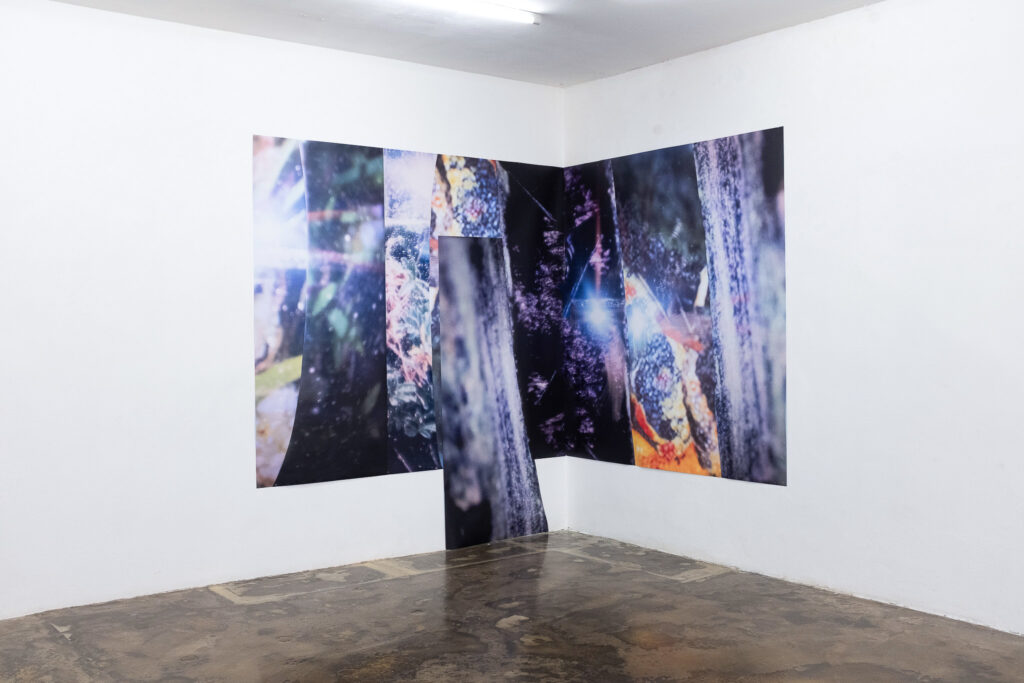
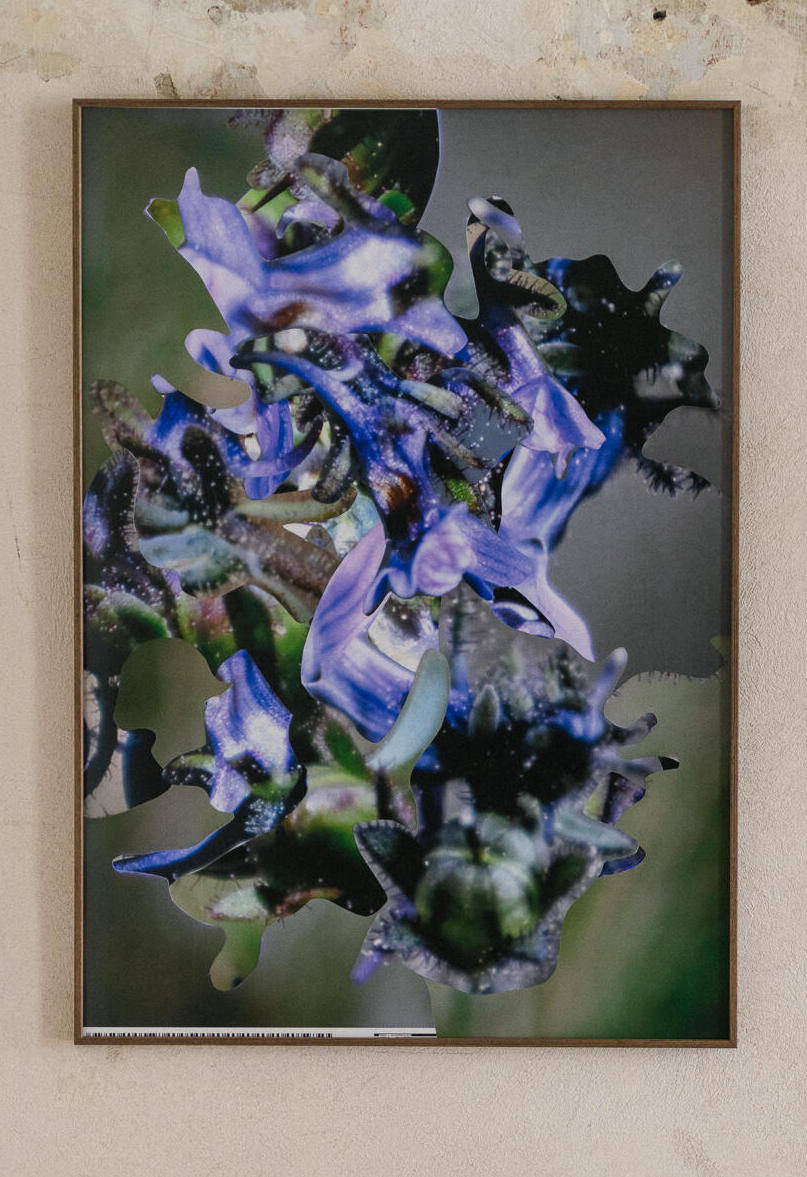
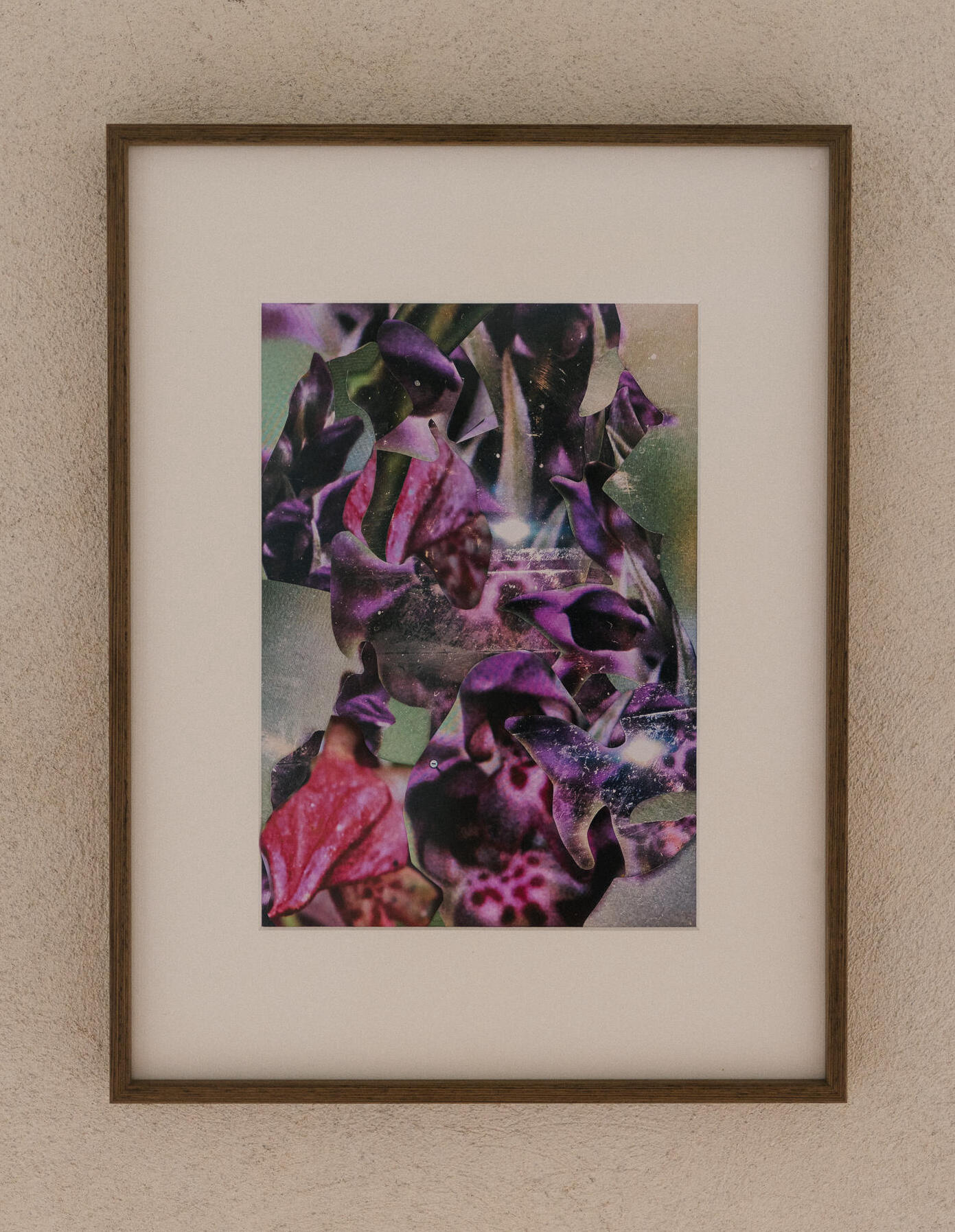
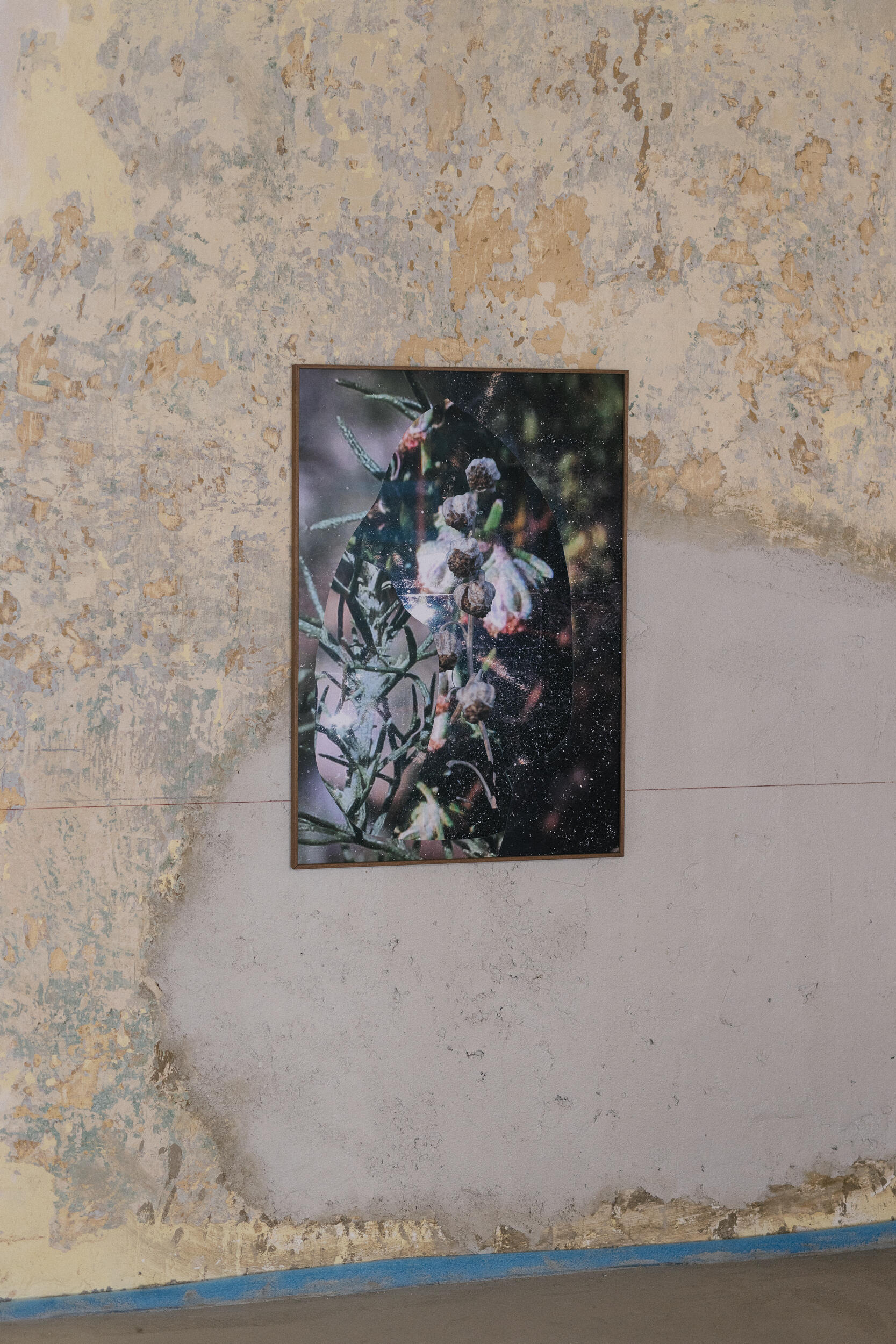
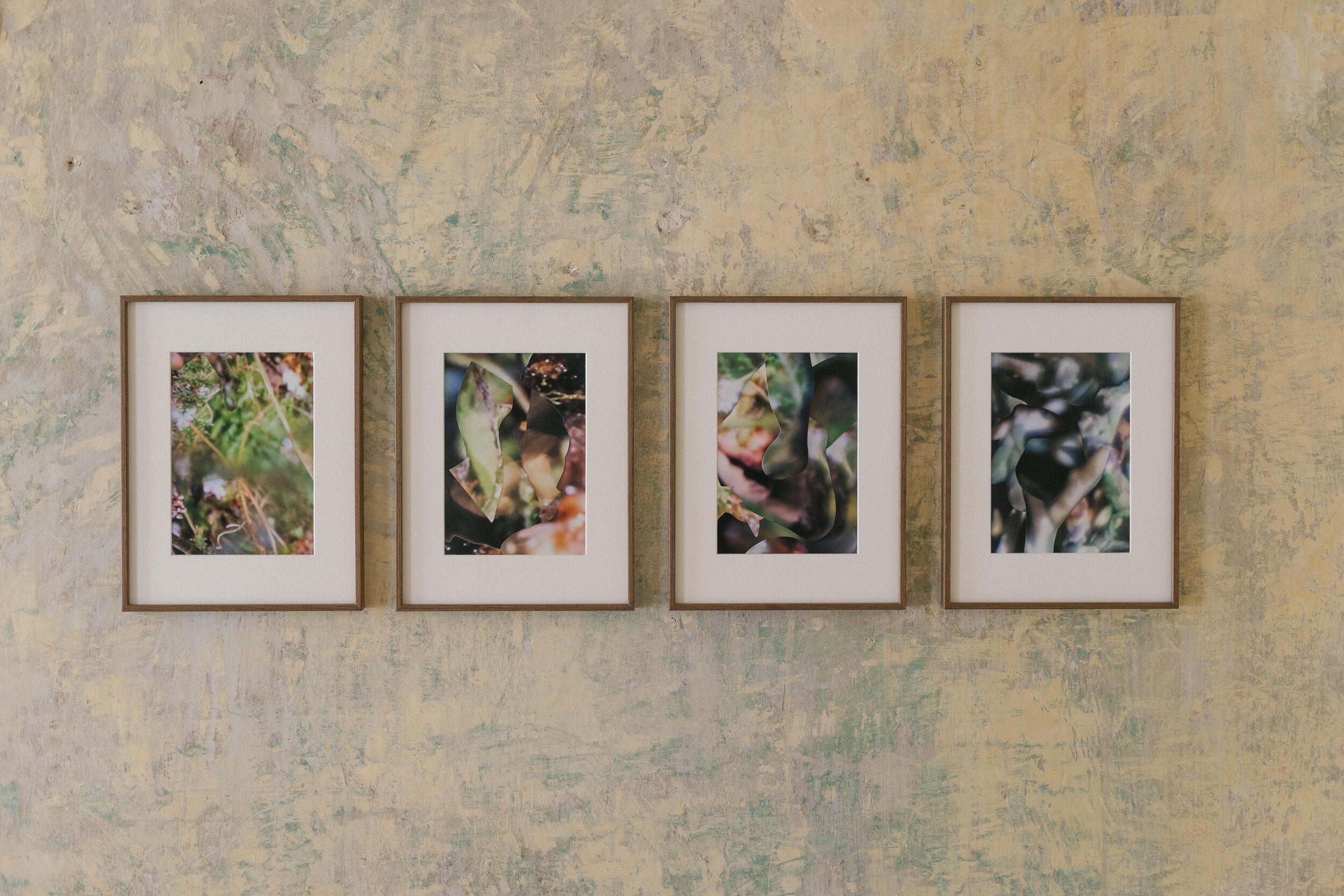
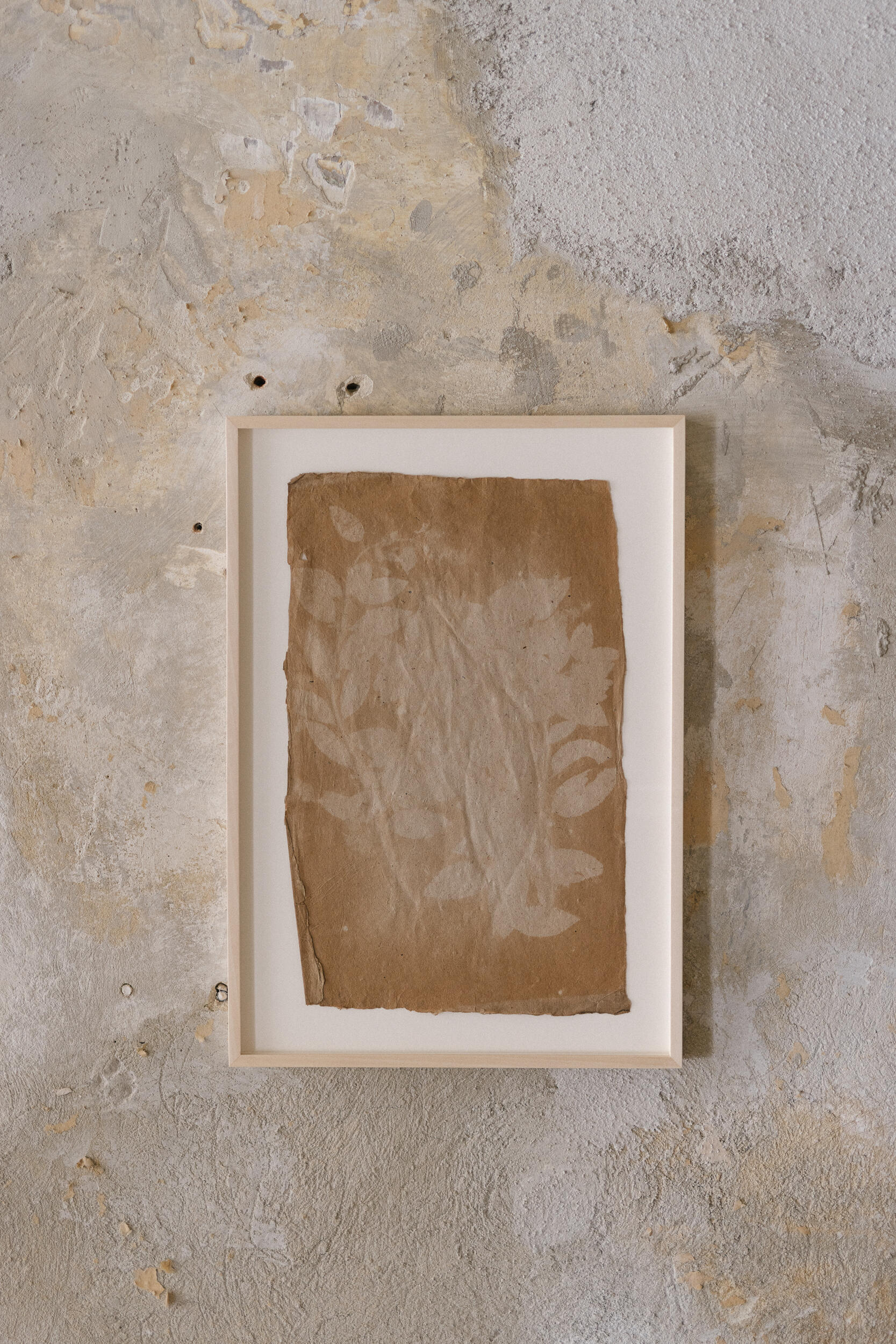
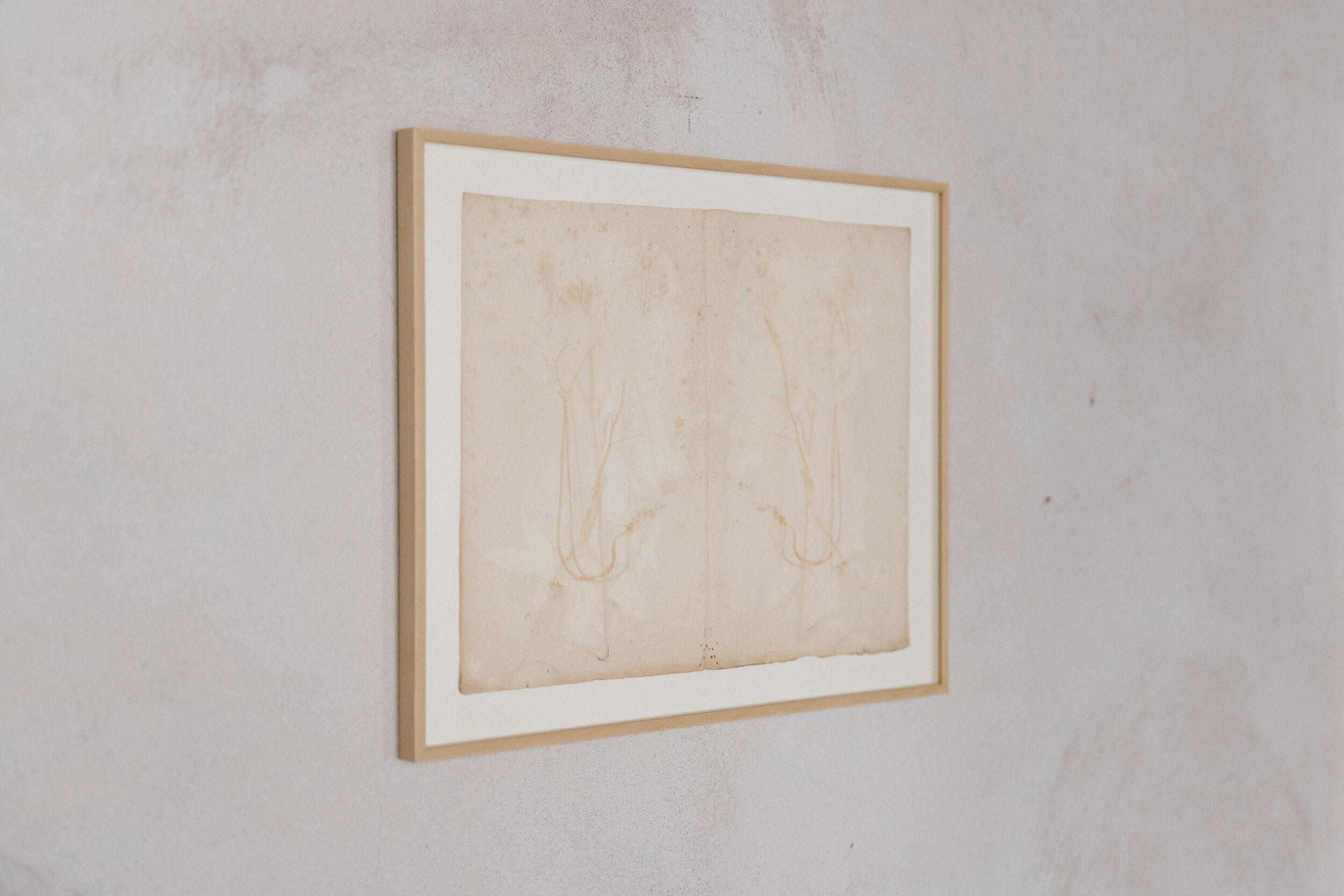
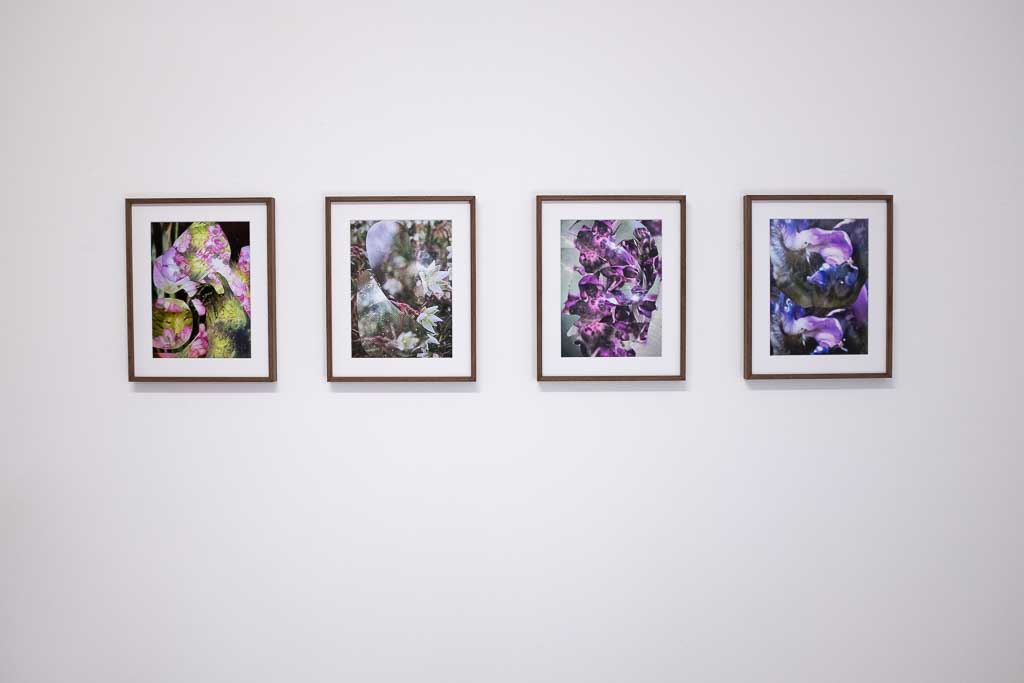
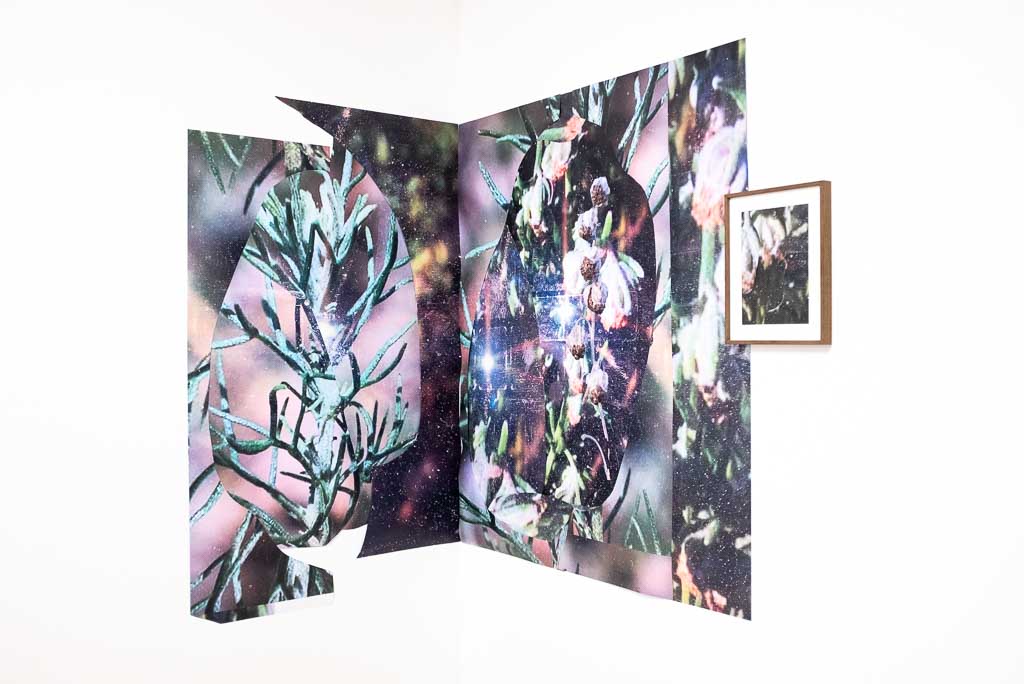
2022-24, Collages from C-Prints (Fujicolor photo paper matte) / In situ wall collages
Collected
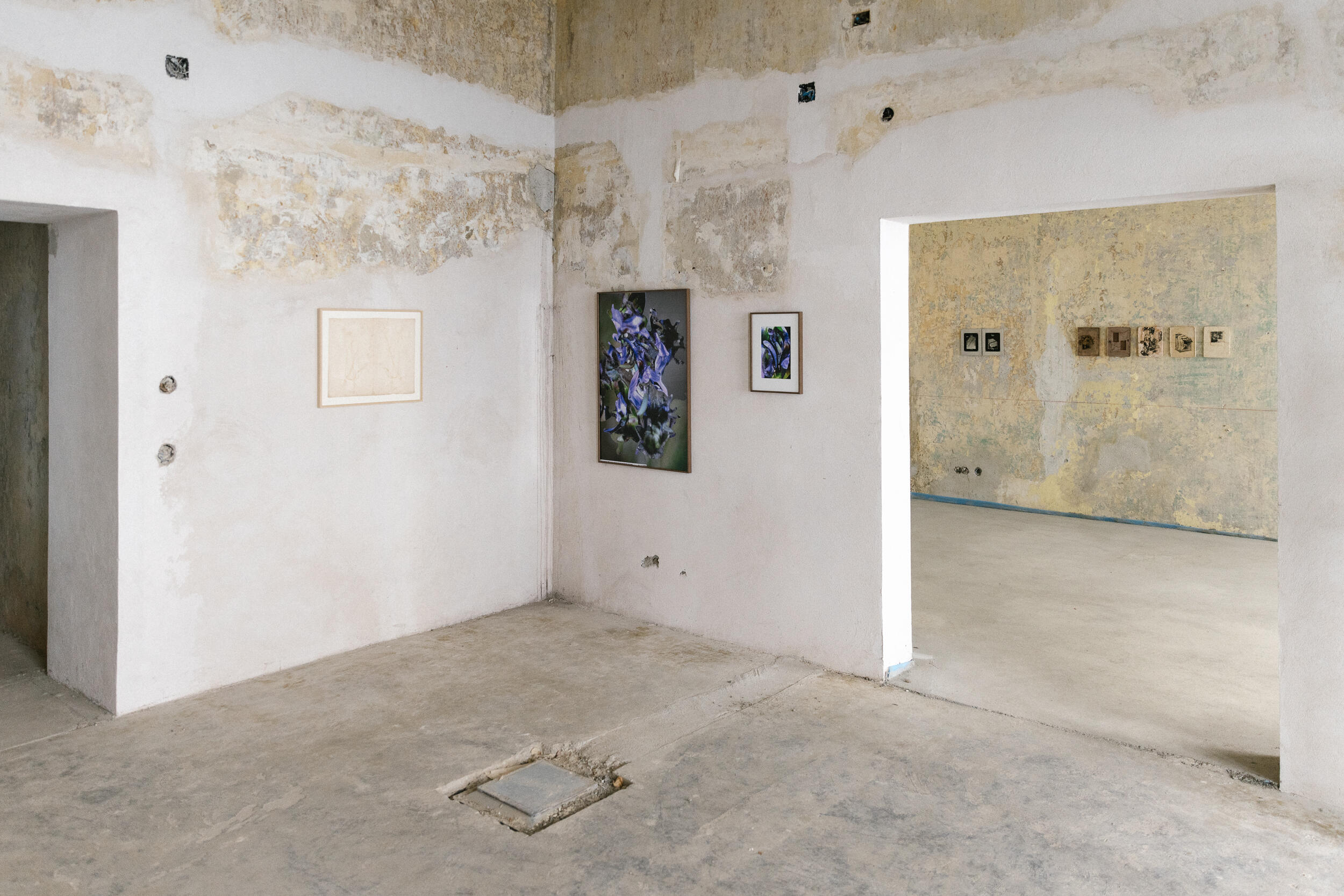
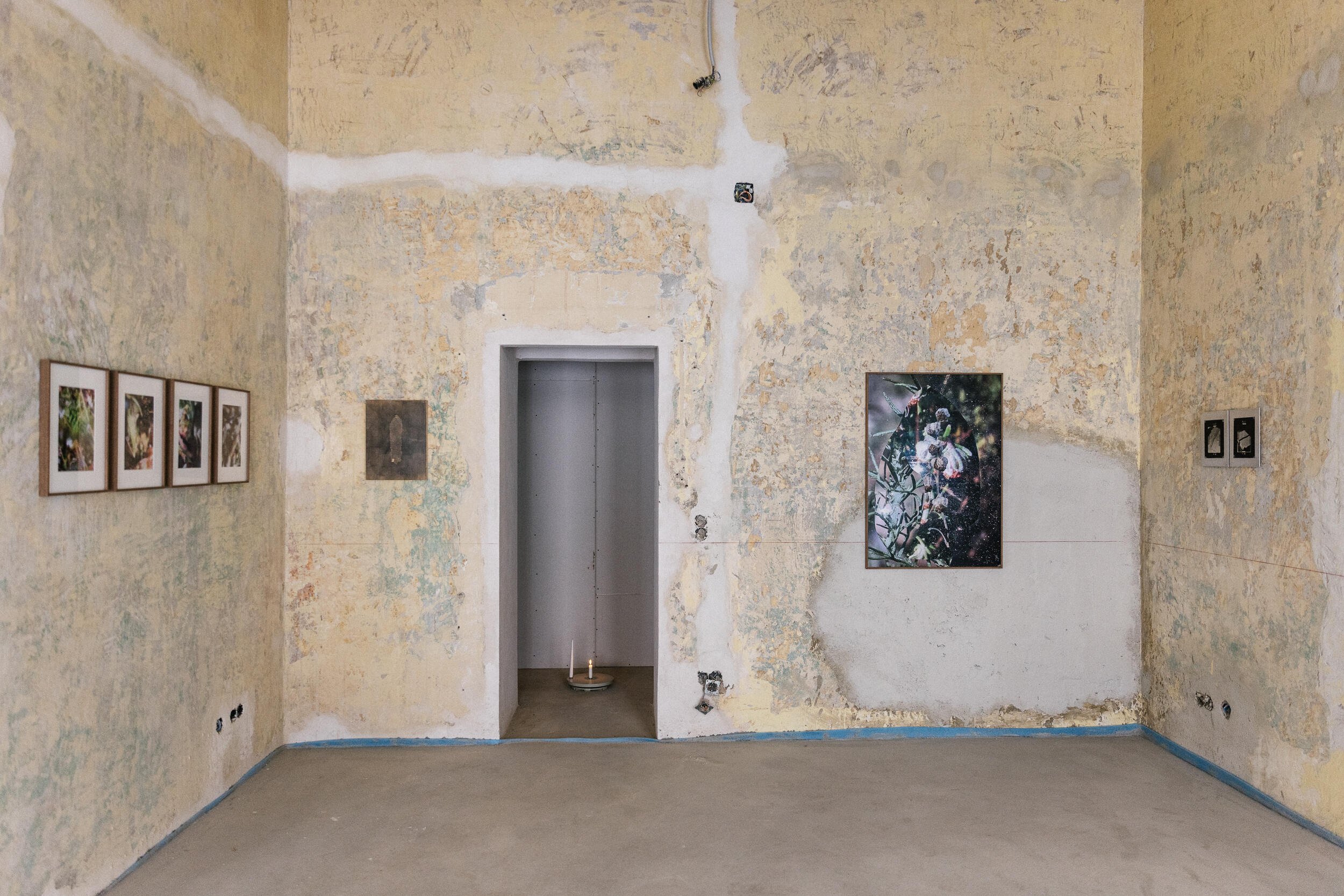
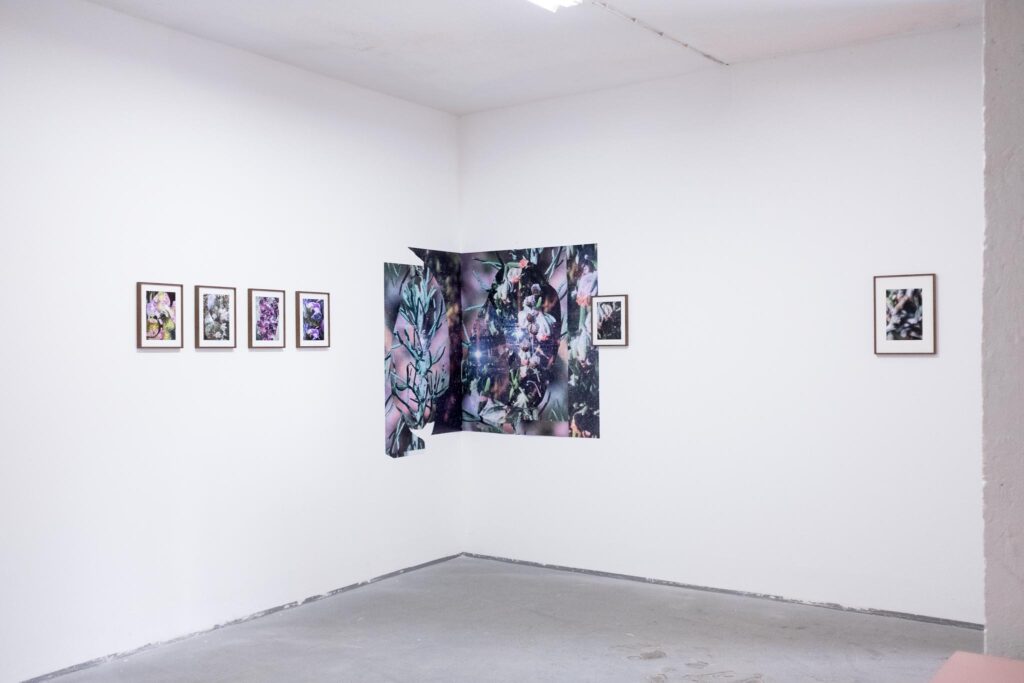
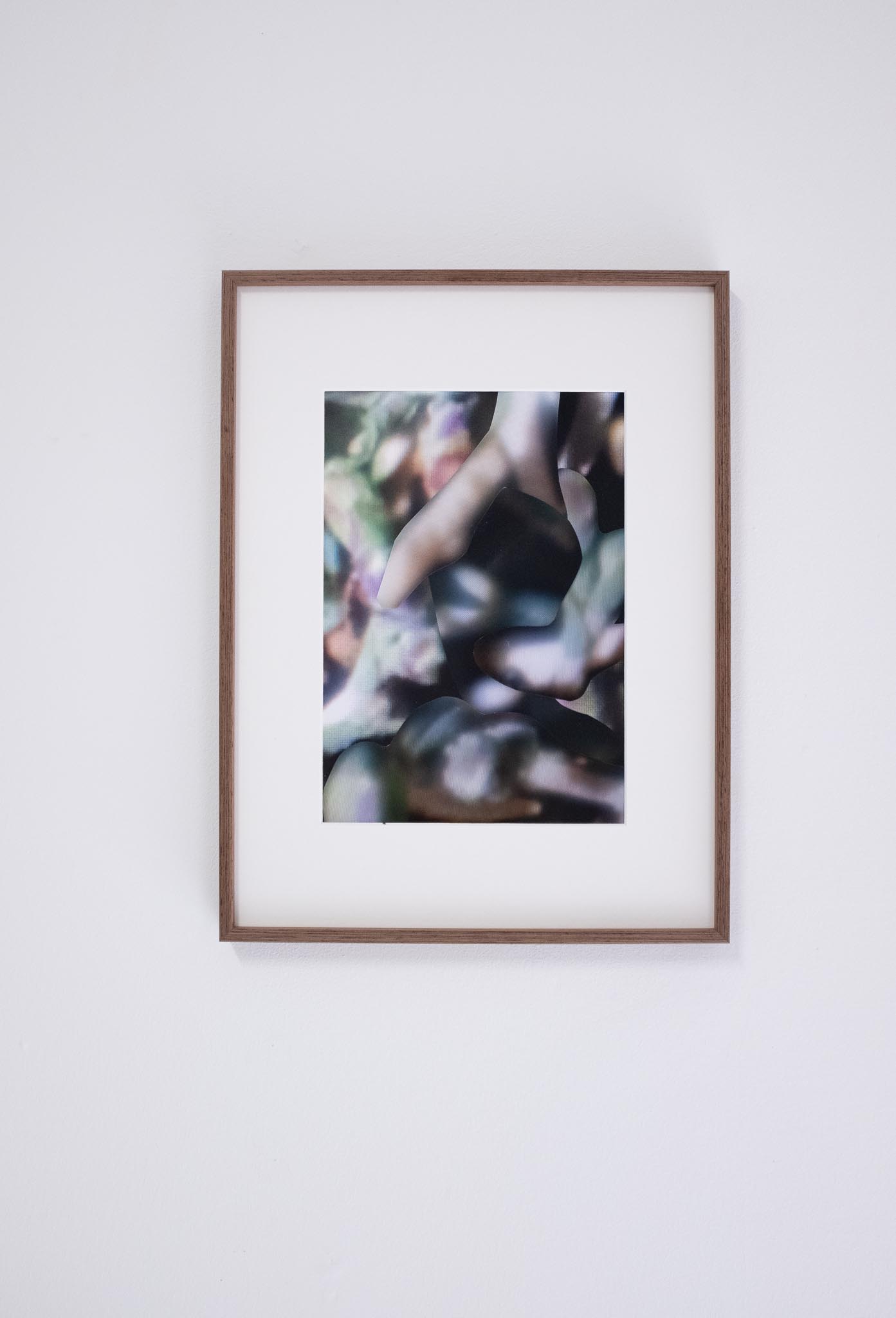
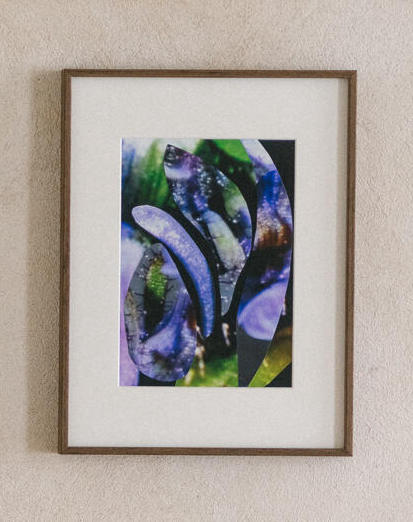
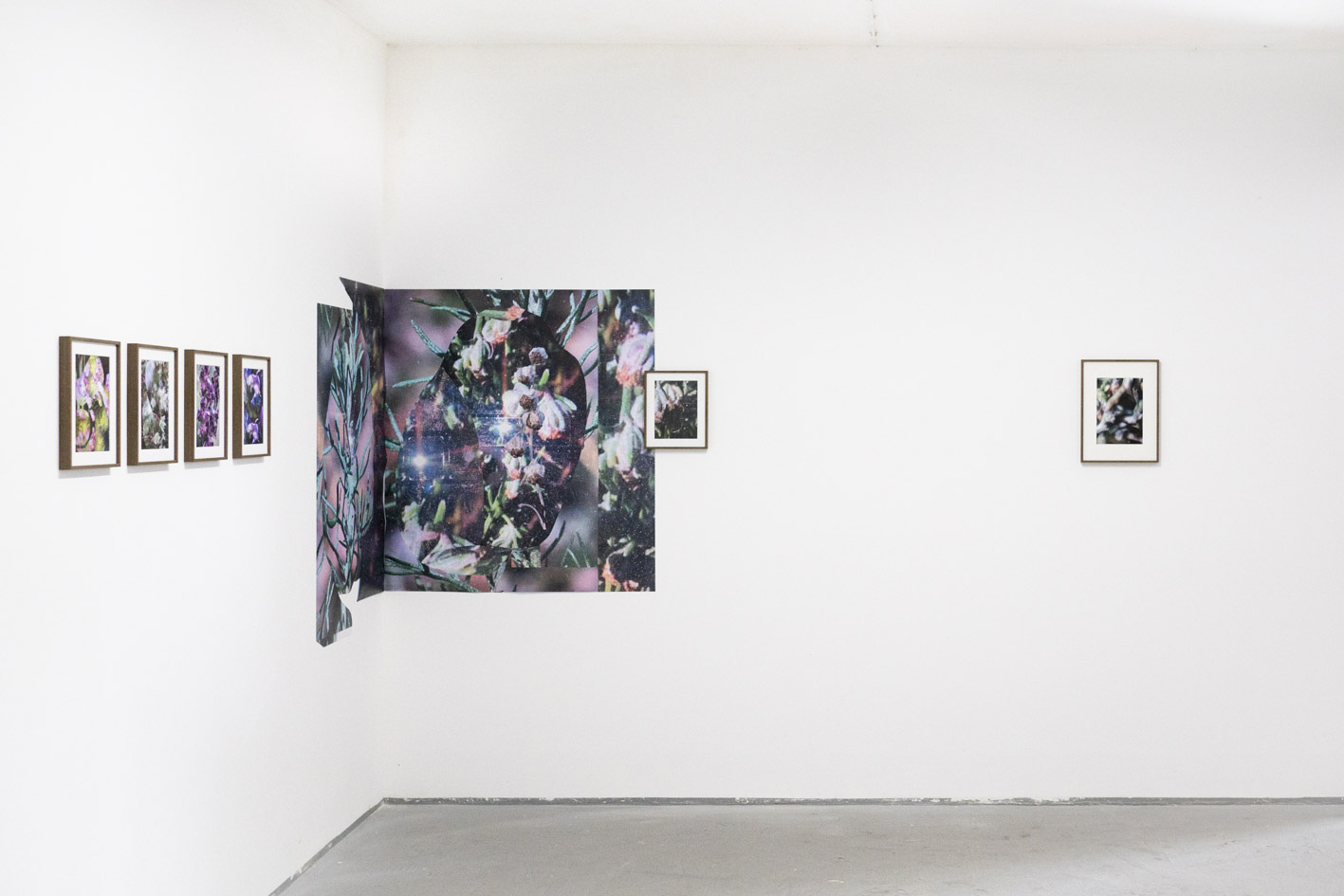
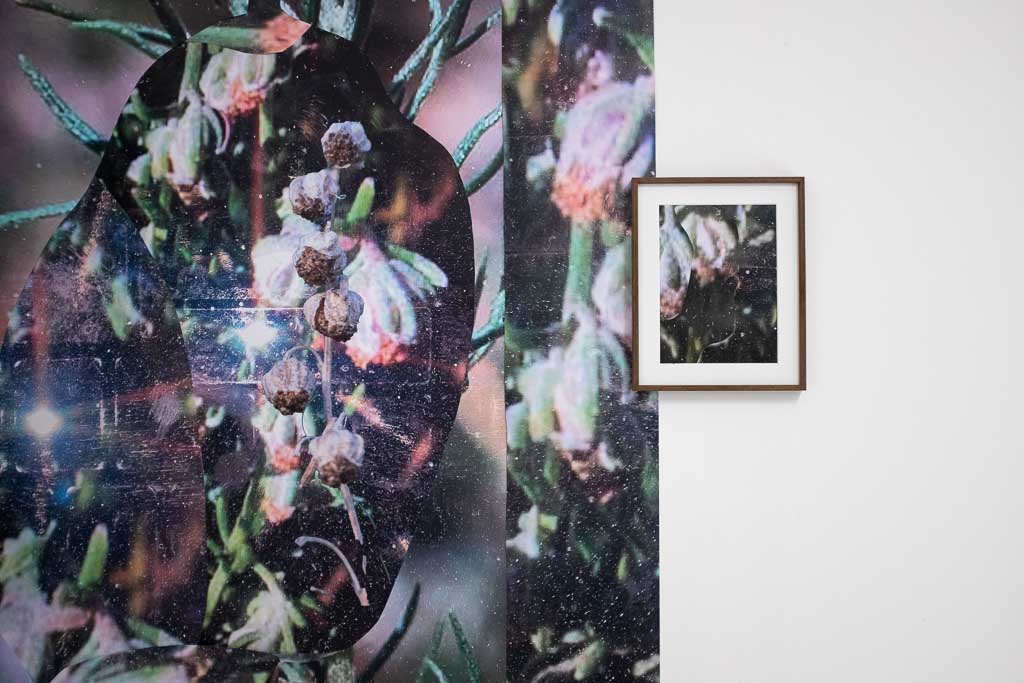
Collected explores the visual memory of endangered and extinct plant species through a series of photographic collages and wall-based installations. Drawing on an extensive image archive gathered from the web, the works operate at the intersection of digital fragment and tactile presence. Image data are exposed as C-prints and subsequently cropped, sometimes following the outlines of blossoms, at other times transformed into new organic silhouettes. The otherwise invisible screen becomes part of the image: keyboard outlines burned into the Retina display, dust, scratches, fingerprints – traces of both device and gesture. Even tools of image processing, such as magnification icons, are absorbed into the visual field. What emerges is a porous image space where fragility, absence, and recollection unfold. The collages do not aim to preserve, but rather to create permeability: for gaps, digital artifacts, and ecological echoes.
Untitled (Abies alba), 22 x 16 cm (c) Michaela Putz, Bildrecht
Untitled (Astragalus danicus), 22 x 16 cm (c) Michaela Putz, Bildrecht
Untitled (Linum radiolas), 22 x 16 cm (c) Michaela Putz, Bildrecht
Untitled (Linum radiolas), 22 x 16 cm (c) Michaela Putz, Bildrecht
Untitled (Orchis coriophora), 22 x 16 cm (c) Michaela Putz, Bildrecht
Untitled (Turgenia latifolia), 22 x 16 cm (c) Michaela Putz, Bildrecht
Michaela Putz, Collected - Plants, Sand, Sea, Duo with Laura Sperl - a ilha, xyz Lisbon, imago photo festival lisboa, 2023 (c) Michaela Putz, Bildrecht
CURATORIAL TEXTS
“In a figurative sense, things that are invisible—and listed as lost throughout Austria—are made visible again: Michaela Putz’s archive comprises photographs of endangered plant species collected online, including often detailed descriptions of their various life stages—for example, Artemis alba, with its buds, feathery foliage, flowers, and seed heads, as well as its astonishing cola-like scent, is described by users. Image data is printed as C-prints, and these (always) rectangular photographs are cropped in the next step; some follow the outlines of flowers, while others take on new organic forms. Different life stages are combined and arranged into collages. Even the otherwise invisible screen on which Michaela scrolls through her search results becomes visible when the artist photographs some of the plants from the screen, revealing a keyboard area—partially burned into the MacBook’s Retina display after years of use—as a light outline, along with dust, scratches, and fingerprints. Image-editing tools, such as the magnifying glass, also become part of the composition. But it is particularly through her decision to interweave out-of-focus sections that Michaela Putz strips away the pragmatism of fact-based research and restores the plants’ sensuality.” — Ruth Horak, 2022, translated from German
“Pixels, cursors, and the materiality of the user interface itself thus become part of her images; what would otherwise be invisible is constantly visualized. At the same time, the artist uses this to illustrate her own artistic practice, through which she examines the structures that define modern existence. In terms of content, however, she refers less to archival practices than to the processes of human memory and its fluid, ever-changing structure. By approaching her work—only seemingly unsystematically, constantly searching, changing, or adapting—Putz works in a manner akin to memory. This “…is fundamentally reconstructive: it proceeds from the present, and thus inevitably leads to a shift, a transformation … a revaluation, a renewal…” (Aleida Assmann, *Spaces of Memory*, 2018, 29). The artist’s digital and manual manipulations—whether created by unlocking, swiping, or zooming in on the user interface—become painterly gestures and, based on the traces of the original images or natural models, give rise to novel creations. In Putz’s work, the past and present thus collide and are condensed into a single image. In doing so, the artist consistently strives for multilayeredness and complexity. By oscillating between different working methods and discourses, she generates a subtly interwoven system of overlapping narratives.” — Birgit Laback, 2023, translated from German
Exhibition views
“Fragmentarium” – Solo Show at Vienna Collectors Club photos: Michaela Putz, Bildrecht and Anna Ignatovich, Vienna Collectors Club
Exhibition views
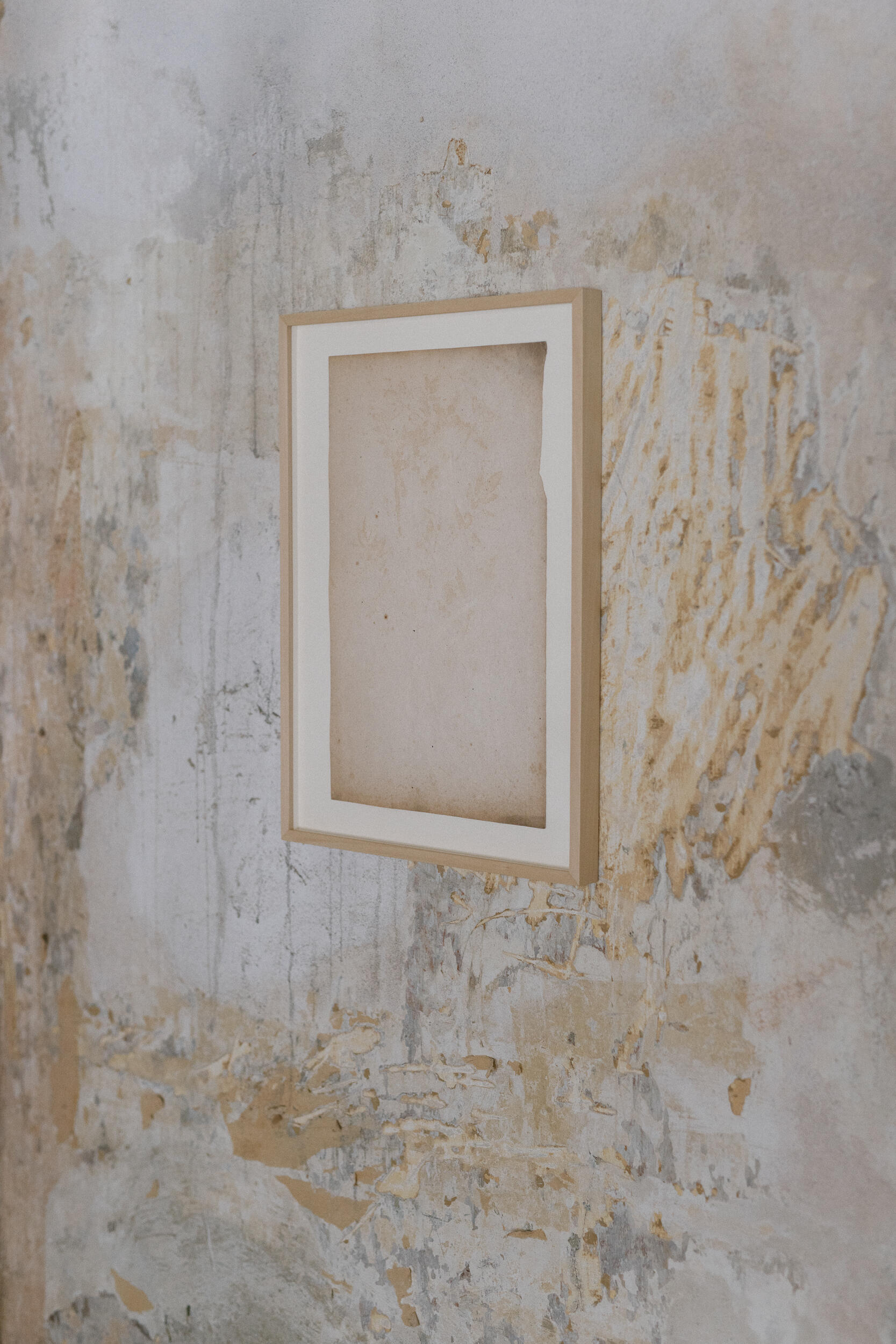
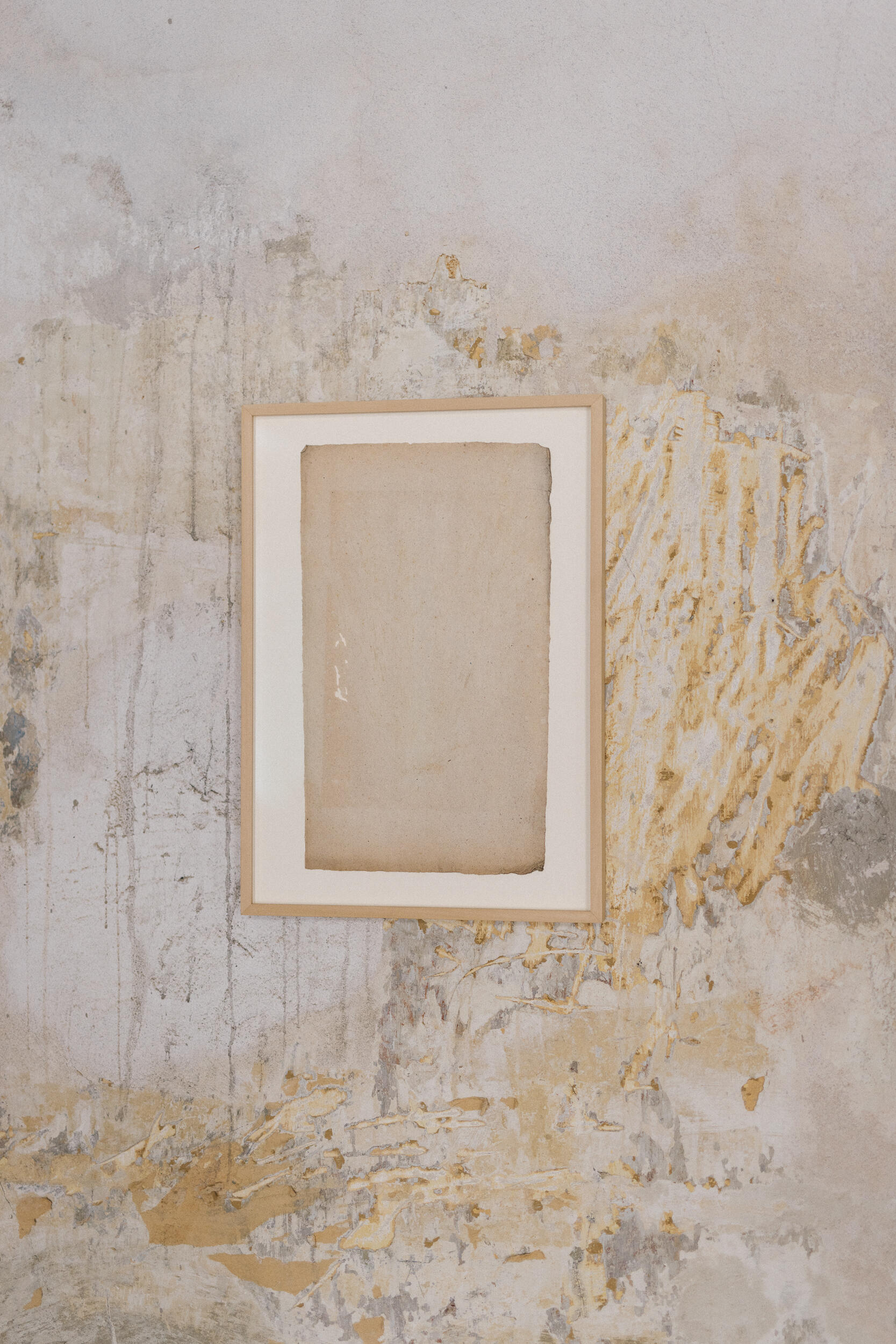
In situ wall collage with injkjet prints on paper; “ALCHEMICAL IM/POSSIBILITIES” – Group show at sehsaal Wien (AT) photos: Michaela Putz, Bildrecht